
Washer Not Draining? Start With the Pump Filter
Water left in the drum is usually a sock, a coin or lint in the pump filter, or a kinked hose. Here is how to check safely, and how to tell when the pump has failed.
By Daniil, owner and lead technician · Updated · Rated on Google from 109 reviews
Before you start
- Don’t force the door of a front-loader that is full of water; the lock is holding it for a reason.
- Have towels and a shallow pan ready. Opening the pump filter releases all the water left in the drum, and it comes out slowly through the small drain tube or all at once around the filter.
- Leaking? Turn off the hot and cold supply valves behind the machine until it has been checked.
The checks, in order
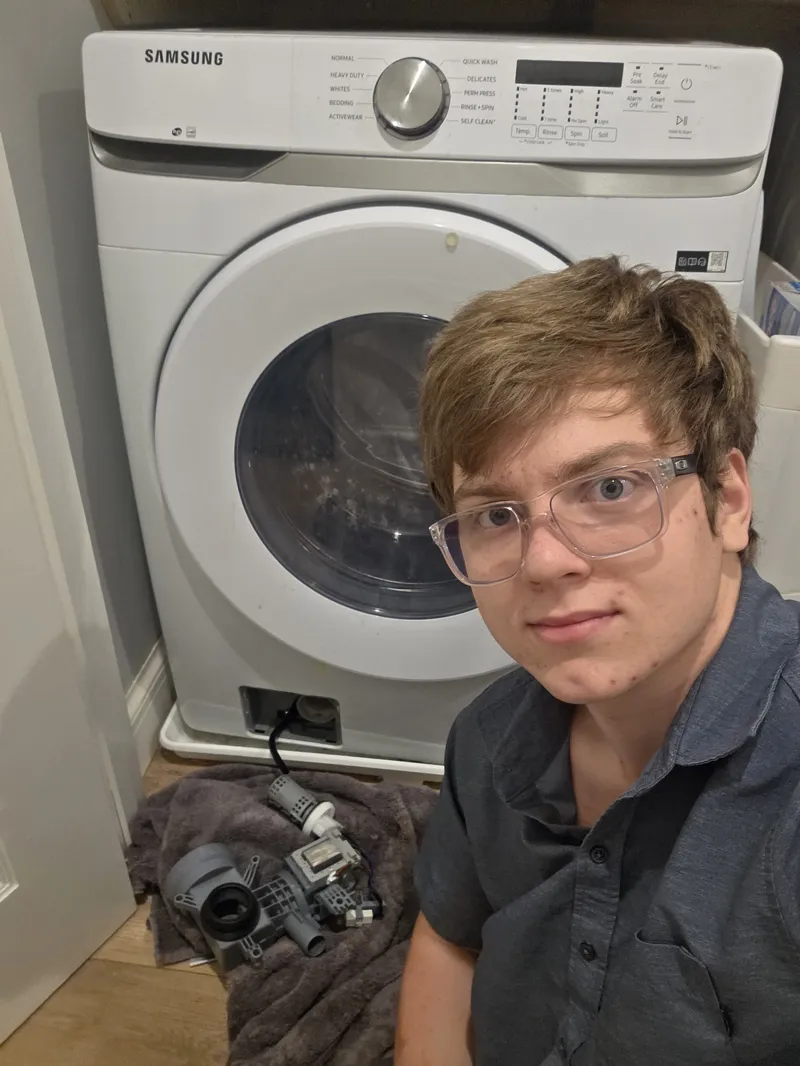
- Pump filter or coin trap (most front-loaders and many compact washers): open the small panel at the bottom front, drain the water into the pan with the little hose if there is one, then unscrew the filter and clear it.
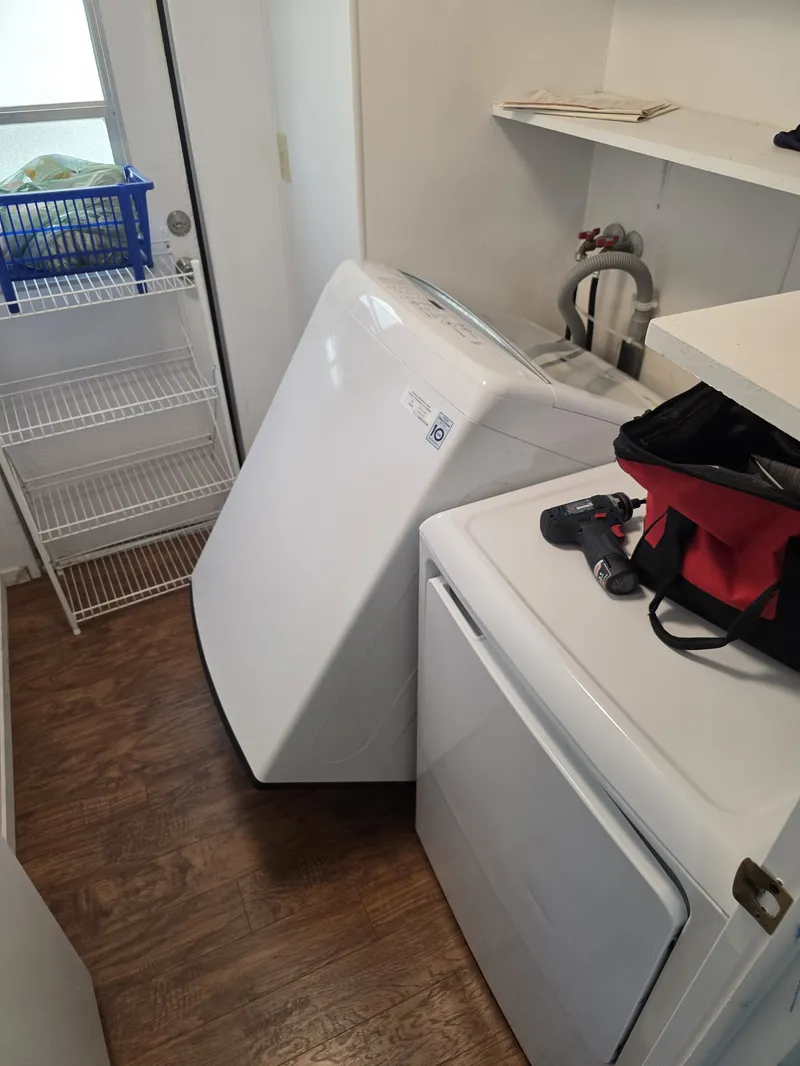
- Drain hose: pull the washer out enough to see the hose. A kink where it was pushed against the wall is common, especially in closets.
- Standpipe or sink: if the hose drains into a standpipe or laundry sink that backs up, the clog is in the house drain.
- Run a drain or spin cycle and listen.
What the result points to
| What you notice | Likely cause |
|---|---|
| Water left in the drum | Coin trap or pump filter, drain pump, kinked or clogged drain hose |
| Pump hums, no water moves | Pump jammed with debris or failed |
| No pump sound at all | Pump motor, wiring, or the control not calling for drain |
| Drains, but won’t spin or stops mid-cycle | Door or lid lock, unbalanced-load detection, drive motor, rotor/stator or hall sensor (LG), belt |
| Drain code on the display | See LG OE, Samsung washer codes, Whirlpool F21. The code narrows the fault but rarely names the part |

Stacked and closet installations
Stacked washer-dryers and compact European washers often need the dryer lifted off or the unit pulled from a closet before anything can be tested. We bring floor protection and plan for it rather than discovering it on arrival, so tell us when you book. In San Francisco, where stacked units in hall closets are common, that planning is most of the job.
Repair or replace?
A pump, lock, boot seal, suspension or agitator coupling is a routine repair. A failed tub bearing on an inexpensive top-loader, or a control board on a machine already near the end of its life, often is not worth it, and we will say so. One customer called about a ten-year-old top-loader and was advised on the phone not to book a visit at all, because the repair would not pay off.
Washer repair in Marin County and San Francisco
UniFix repairs front-load, top-load, stacked and compact washers across Marin County from San Rafael and in San Francisco from our Marina location. Diagnostic visits start at $85; the fee varies by appliance type, brand, location and appointment requirements, is confirmed before scheduling, and is applied toward the repair if you go ahead. Repairs carry a written warranty on parts and labor; the term is stated on your invoice. More on washer repair.
Call Marin (415) 494-7882 or San Francisco (415) 683-0403. Tell us the brand, any code, whether it is stacked or in a closet, and the model number (door frame on front-loaders; under the lid or on the back panel on top-loaders).
Common questions
How do I drain a washer full of water?
Why won’t my washer drain after cleaning the filter?
My washer drains but won’t spin. Is it the same problem?
Do you repair stacked washer-dryers in closets?
Request a visit
Prefer to talk? Call (415) 494-7882 (San Francisco: (415) 683-0403). UniFix Appliance Repair diagnostic visits start at $85. The diagnostic fee varies by appliance type, brand, location, and appointment requirements. We confirm the fee before scheduling. If you approve the repair, the diagnostic fee is applied toward it.